
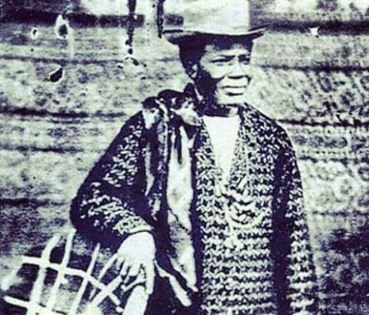
Background
King Jaja of Opobo (1821-1891), the wealthiest and
most powerful monarch in the Niger Delta and sole
founder of Opobo, was Igbo.
Born in his native Umuduruoha, Amaigbo, present-
day, Imo State, and named Mbanaso
Okwaraozurumbaa at birth, he was captured by
slave traders and sold into captivity in Bonny at the
age of 12, where he earned his way out of slavery
having also adopted the Ijaw-Ibani culture.
From being a slave to a king
Though he generated astounding wealth for Bonny,
when that kingdom’s throne became vacant, his
quest to vie for it was politically checkmated by a
fellow wealthy slave (wealth was a deciding factor
in monarchy). Thus, he left with his supporters to
found a new town, Opobo, near Andoni. Bonny and
it’s affiliated British merchants would come to regret
that day.
The new development Jaja (aka Jubo Jubogha)
relocated to in 1869, was named Opobo and the
location was strategically positioned that he could
transact first hand with both national and
international merchants, effectively becoming a
monopolist in oil palm trade.
Trade and the resultant wealth exploded so much
that his former British trading partners lost
£100,000 (in 1870), and Bonny pleaded with him to
return (which he refused).
He then came to the
attention of Queen Victoria who, impressed by his
influence, recognized him as King of Opobo in 1873
and also personally presented him with a sword in
Buckingham Palace in 1875 after he sent troops to
assist Britain in the Ashante war.
The scramble for Africa began in the 19th century.
Jaja was infamous for resisting foreign political and
economic influence and he kept taxing the British
merchants much to their indignation.
Greed and the fear of Jaja’s influence led the new
Consul-General, to invite Jaja out of his kingdom
and onboard a ship, ”The Goshawk”, for trade
discussions.
Once onboard, a deportation order was served on
him. He was illegally tried and convicted in Gold
Coast, present-day Ghana, in 1887 and exiled to
Saint Vincent in the distant West Indies and to be
later relocated to Barbados.
His pleas to return to his kingdom were granted in
1891.
Death
Unfortunately, he died in Tenerife, en route
Opobo, after allegedly poisoned with a cup of tea.
After his death, the influence of Opobo died with
him.
His body was received with much sorrow by his
people who gave him a full, honourable royal burial.
He was 70.

 Young-po Reporters